
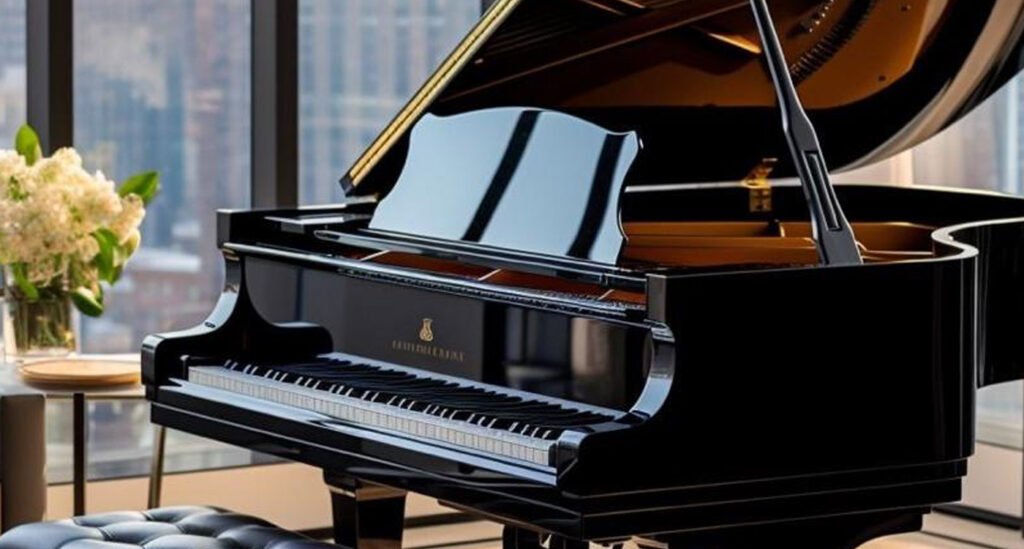
I have always been very passionate about music. I have loved listening to music since
early childhood–a habit, I think, I inculcated from both my parents, who are passionate
music lovers. As my mother used to play the guitar, I too learnt a musical instrument
and took to the piano. I was very fortunate to have an accomplished and classically
trained pianist as my teacher, who was extremely patient, encouraging and supportive
during this decade-long journey of learning the piano. I have been able to qualify the
London College of Music and am now gearing up for the final Level 8.
Background and history
Instruments can be divided into three categories; string instruments, wind instruments
and percussion instruments based on how they produce sounds. The piano’s ancestry
can be traced back through various instruments such as the clavichord, harpsichord and
dulcimer. But if it were traced back even further, one would find that the piano is a
descendant of the monochord. In other words, based on its ancestry, the piano can be
classified as a string instrument, although it can also be considered a percussion
instrument because hammers strike the strings to produce sound. In this way, it is like a
dulcimer. The dulcimer is an instrument that originated in the Middle East and spread to
Europe in the 11th century.
The piano’s original name was the gravicembalo col piano e forte. Translated from
Italian, it means “keyboard instrument that plays soft and loud.” Over the years, it was
shortened to pianoforte or fortepiano and eventually, just to piano.
The piano was invented by Bartolomeo Cristofori (1655-1731) of Italy. The piano that
Cristofori first invented in Italy had only 54 keys. As piano music developed and
evolved, the keyboard compass was gradually expanded in response to requests from
composers who sought a broader potential for expression. By the 1890s, today’s
modern keyboard had expanded to a range of 88 keys with 52 white keys and 36 black
keys.
Piano keys are arranged in black and white patterns to aid identification, a tradition
rooted in the original use of ebony and ivory (hence the phrase, “Tickle the ivories!”).
Today, the wooden keys are coated in colored plastic, but the traditional coloring
continues.
The piano is far more than just an assembly of wood, wires and hammers; while these
define its physical form, its true magic lies in its power to transform the individual who
plays it.
Waltz No 19 in A minor – Frédéric Chopin
Benefits of playing the piano
The physical and mental benefits of playing music have long been recognized. Music is
one of the most neurologically complex things we can do. Because music uniquely
engages the entire brain, it has become a powerful tool to support rehabilitation,
memory, mood and reduce anxiety. Researchers have found that people who took to
playing musical instruments are credited with a boost in IQ scores due to a combination
of auditory, physical and cognitive demands that music training requires. The piano has
been an unparalleled outlet for those seeking escape, creative expression and simply
fun and joy.
Piano music has a special ability to deliver healing effects, since it only takes one
person to play a full orchestral piece. With 10 fingers and 88 keys, an experienced
piano player can change the mood of an entire room.
In addition, playing live piano music, lifts your mood into a state of joy, which in turn
causes the generation of copious amounts of dopamine in your brain and gut, leading to
a massive proliferation of your white blood cell count, your body’s primary defense
against pathogens. Of course, other musical instruments also offer healing benefits but
none more so than the piano because no other instrument offers the piano’s wide range
of frequencies and harmonics.
I have personally experienced this firsthand. During my Grade 10 board examinations, I
used to play the piano regularly during my study- breaks. It rejuvenated me, allowing me
to resume my studies with renewed focus and vigor.
In addition, studies have shown, time spent on the keyboard improves mental health:
people who make music experience less anxiety, loneliness, and depression. Playing
the piano has also been shown to be an effective means of stress relief and offers
ample opportunities to bolster self-esteem. It is also a widely used form of therapy for
attention deficit disorder.
As the popular musician Norah Jones has said “Without a piano I don’t know how to
stand, don’t know what to do with my hands.” The piano has given my life a sense of
purpose, and I cannot imagine it today without this remarkable instrument.