
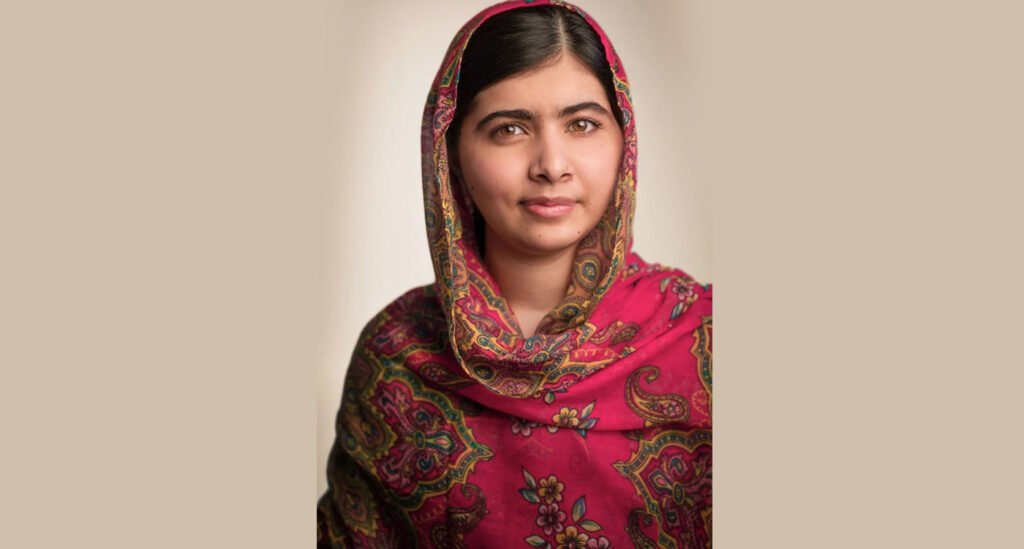
Sometimes you come across people who leave an indelible mark on you. I recently came across Malala’s speech given at the United Nations in 2013. I was left mesmerized as it was a very powerful and motivational speech. This got me interested to learn more about her.
Malala Yousufzai is a human rights advocate for the education of women and children. Born in 1997, she grew up in the Swat Valley in Pakistan- a region where girls’ education met with a lot of challenges. She developed a deep love for learning which was inspired by her father, Ziauddin Yousufzai- an educator and activist. As an outspoken proponent for girls’ rights to education, she protested the restrictions under the Taliban regime- an oppressive militant group which had gained control over the valley.
Malala, when she was 11 years old, began writing a blog for BBC Urdu under the pseudonym “Gul Makai.”In this blog, she described how the Taliban had banned girls from attending school and the fear they instilled in the community. She shared her experiences and the struggles she faced as a girl who wanted an education. Malala’s diary gained global attention, turning her into a symbol of resistance. Malala’s activism caught the Taliban’s attention, made her a target and in 2012 she was attacked by the Taliban while travelling back home from school. A bullet struck the left side of her forehead.Two other girls were also injured in the attack. Malala was critically wounded. But she miraculously survived after being treated in multiple hospitals in Pakistan and then flown by the United Kingdom’s government to Birmingham’s Queen Elizabeth hospital, wherein she underwent multiple surgeries and months of rehabilitation.
Despite facing near-death, Malala refused to be quiet. Instead, she emerged even stronger, more vocal and determined to continue her fight for education. She has turned into a global symbol of the fight for education and women’s rights. She gave a soul stirring speech in the UN in 2013, asking for education of all children regardless of their gender.In her words, “Through education, we can fight terrorism, not through guns, not through weapons.” She emphasized the power of books and pens over guns. Her powerful words, “pen is mightier than the sword” and that “extremists are afraid of pens”, advocating free, compulsory education for all. Strong words from a person who survived death from close quarters. The world listened to her,and she became an international symbol of the fight for girls’ education and because of her fearless advocacy she went on to win the Nobel-Peace prize in 2014 (along with Kailash Satyarthi), becoming the youngest ever Nobel Laureate at age 17- ironically, an Indian and Pakistani won the Nobel Peace Prize together!
She later founded the Malala Fund, an organization dedicated to providing education for girls worldwide. And in her words, “Weakness, fear and hopelessness died. Strength, power and courage was born.”, after this fatal attack on her. She also pursued her studies at Oxford University while continuing her activism.
In her 28 years she has done more than many people can do in their lifetime. Malala’s advocacy led to many countries like Pakistan, Nigeria, Tanzania, Brazil and others to pass new laws to improve access to education for girls. It has inspired millions to demand their right to education. July 12th is a day dedicated to her by the UN, a date that also marks her birthday.
Malala continues advocating girls’ education globally. For her, education wasn’t just about learning—it was about empowerment. She’s my role model for courage and strength and exemplifies extraordinary leadership to raise her voice against discrimination and injustice. In her words “One child, one teacher, one pen and one book can change the world. Education is the only solution. Education first.”
She has defied oppression to champion education and women’s rights. Her story is one of bravery, resilience and the power of education. She turned a personal tragedy into a global movement for girls’ rights. She inspires people to stand up for what is right and what they believe in.
Today,Malala continues to remain one of the most influential voices in the fight for education and women’s rights with her unwavering conviction spotlighting the crucial issue for girls’ education.