
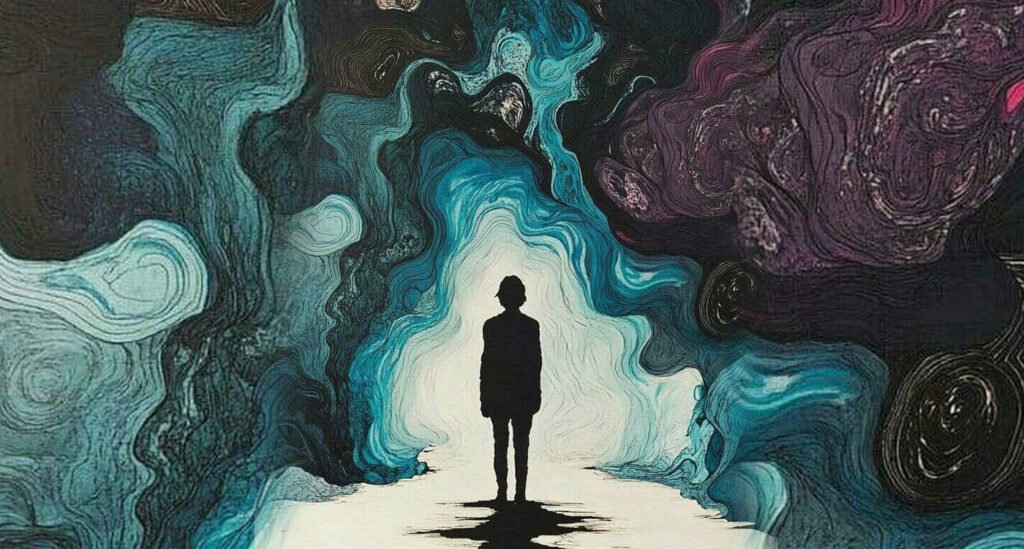
Artistic talent often comes with a price. Many of the artists whose work we so admire were haunted by depression, anxiety and mania. Health and illness are recurring themes in the history of art. They’ve been portrayed in a multitude of ways over the centuries and across media. Below are a few renowned artists who struggled with mental health-
Vincent Van Gogh
By far the most famous example of an artist with mental illness is the hugely famous Vincent Van Gogh. Van Gogh suffered from anxiety and depression throughout his short life, and he once wrote, “I put my heart and my soul into my work and lost my mind in the process.”
Vincent Van Gogh was a Dutch post-Impressionist painter of landscapes, still life works, and self-portraits. He took to painting at the age of 27. He was not commercially successful during his lifetime and his death at 37, from a self-inflicted gunshot, came after years of mental illness, depression and poverty.
After his death, he became better known and is now considered one of the most influential artists in the history of Western Art. His work, with its bold brush strokes and colors, shows not only a tortured mind but also an immense talent. Van Gogh had many mental health issues that caused him great distress during his life. In 1888, his struggles led him to cut off his left ear and he was subsequently hospitalized. After his injury, he painted self-portraits showing himself with the bandages around his ear, including Self Portrait with Bandaged Ear, created within a week after he left the hospital in January 1889. Van Gogh continued to create art as he dealt with his struggles in life.
According to modern day psychiatrists, Van Gogh suffered from bipolar and borderline personality disorders, which were not known in those times.Yet the most astounding aspect is despite his debilitating mental health issues, it did not prevent him from creating his most outstanding works (The Starry Night and Sunflowers) were made during his stay in the asylum.
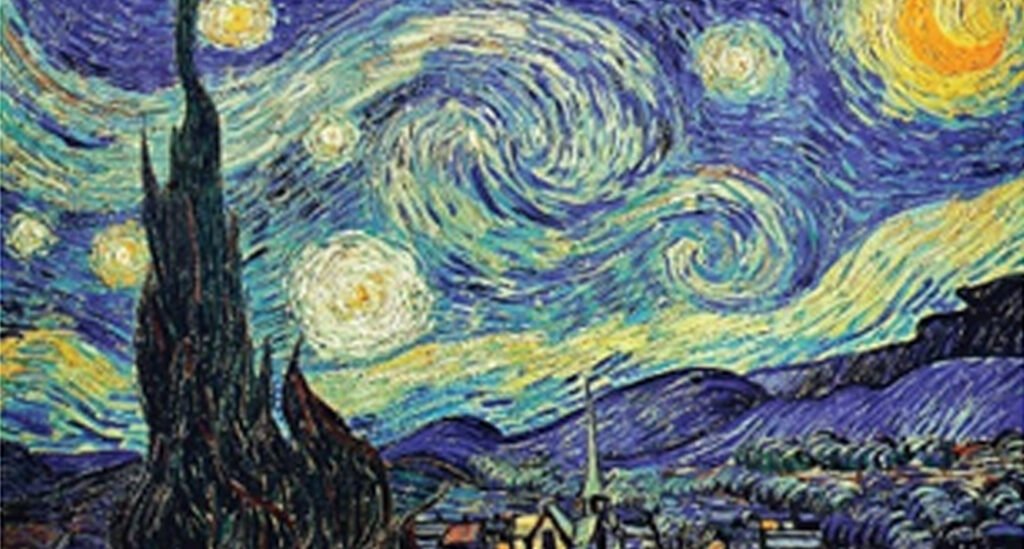
Starry Night
Frida Kahlo
Frida Kahlo was a Mexican painter, who drew her inspiration from Mexican Folk Culture and is known for her many portraits, self-portraits and works inspired by the country’s culture. She was disabled by polio as a child. Frida Kahlo had an accident that changed the course of her life, both physically and creatively. In 1925, 18-year-old Kahlo was injured in a bus accident. Kahlo suffered serious injuries, including fractures of her spine that required multiple surgeries over her lifetime. While recuperating from the accident, she began painting, which shifted her interest from wanting to study medicine to making art. Many of her later works also expressed issues of health and disability and some, like the 1929 painting The Bus, have a connection to the accident itself.
Frida Kahlo struggled with mental and physical pain caused by lifelong psychological and physical trauma, (including polio, a catastrophic bus accident, multiple surgeries and neurological issues) which led to depression, anxiety and PTSD. Her mental health was seriously affected. In addition, her inability to embrace motherhood, due to the accident, is also said to be one of the main motives of her work.She managed to work around all her health and mental issues to create powerful works of art that still resonate with viewers today.
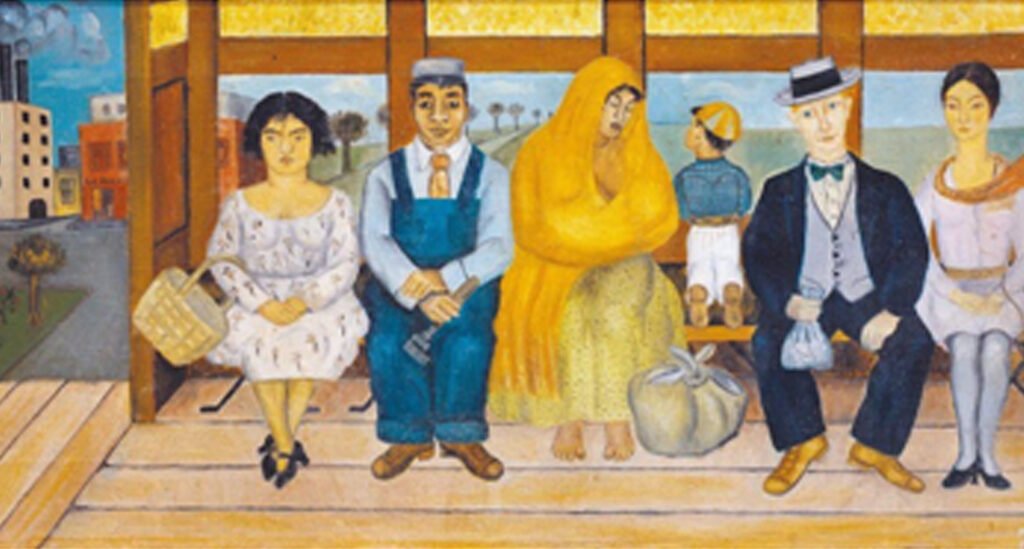
The Bus
Louis Wain
Louis Wain was an English Artist, who is best known for his paintings of anthropomorphic cats and kittens. He was born with a cleft lip and suffered from Schizophrenia. It is believed that his paintings were a manifestation of his disorder. His obsession with painting cats started from a personal tragedy. His wife Emily Richardson had cancer and their pet cat, Peter,brought them some comfort in those trying times. This laid the foundation of his career as a ‘cat artist’.
In his later years, his abstract art is often linked to his struggles with mental illness. His wife’s early death led to deep depression and he was later also diagnosed with Schizophrenia, while some say that he had Asperger’s Syndrome (autism). Despite these disorders, he continued drawing. Some of his most spectacular work was produced in the garden of a hospital in north London, which also had a colony of cats. As Wain’s condition worsened, his pictures of cats became more abstract, until, towards the end of his life, they were barely recognizable as cats at all, but fractal shapes- his style developed as his illness progressed.
Though having lived a sad life with many psychological disorders, his artworks have brought joy to countless people over the years.
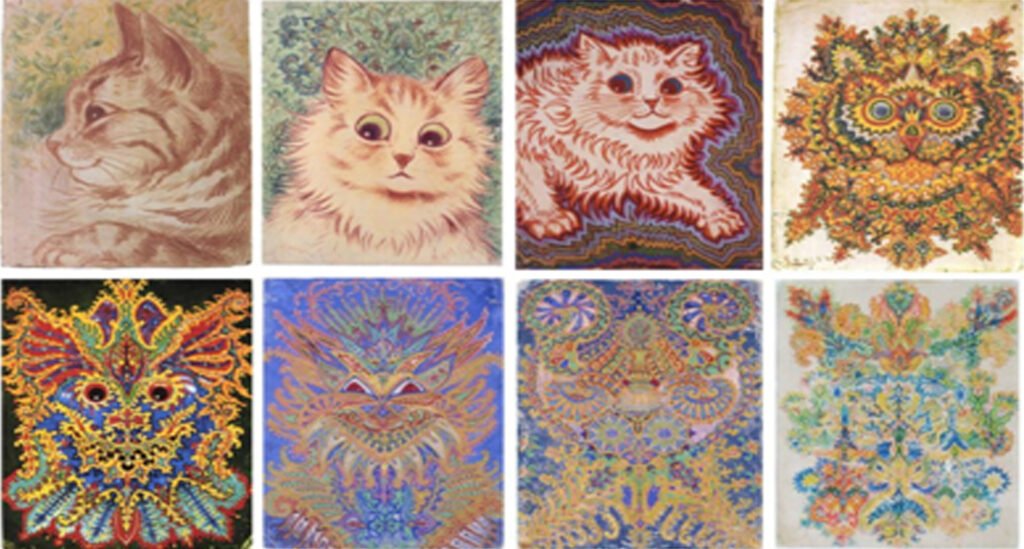
Development of Cats
Richard Dadd
Richard Dadd was a Victorian artist known not only for his artworks depicting fairies and other supernatural subjects but also killing his father whilst in the midst of a psychotic breakdown.It is generally accepted that Dadd suffered from Schizophrenia, with characteristic delusions, rambling conversations, hallucinations of reference, violence and perceptual disorder. Even though he was confined to an asylum for life, he continued to produce art, some of which were regarded as works of genius.
Dadd’s drawings and paintings were prolific. He produced some of the most melancholic paintings of all time, where the eternal struggle between good and evil was depicted. He also painted murals and decorative scenery for the hospital. His paintings embodied mythology, literature, antiquity and his dramatic, vivid fantasies. His works of fantasy, spirits and imagination, such as Puck and Titania Sleeping earned him the epithet ‘the fairy painter’.
Despite his mental disturbance, Richard Dadd was considered one of the most promising artists of his time. It is said that his development of insanity unearthed his hidden artistic talent and he possessed startling visions and insights, unknown to the sane, which he brought out in his paintings.
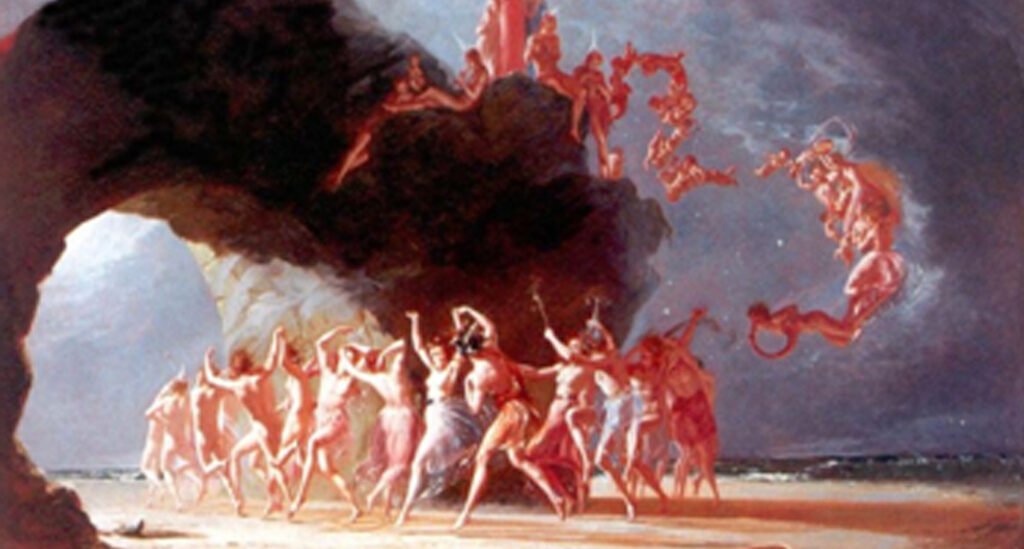
Come unto These Yellow Sands
So, is there a connection between art and mental health?
Art has a unique ability to anchor us in the present moment, a trait that makes it a powerful tool for enhancing mindfulness. When we immerse ourselves in creating art, we’re drawn away from the chaos of daily life and into a flow state where time seems to stand still.As someone battling mental health issues, art possibly gives you the anchor to have moments of calm and peacefulness.
The act of creating art-be it painting, drawing or sculpting, is therapeutic. It requires concentration and intention, which naturally quiets the mind and improves our mindfulness of everything around us.
Art becomes a mirror, reflecting our inner world and promoting a greater sense of self-awareness and inner peace. That’s just one of the ways art and mental health are connected.It provides a unique outlet for emotions that are often hard to articulate. Whether it’s joy, sadness, anger or confusion, putting your feelings into a creative project can be incredibly cathartic.
Some artists suspect their mental illness makes it easier for them to enter a flow state than others.The flow the artists get into while creating, is described as a state of mind with therapeutic potential. It therefore becomes a “highly meditative experience” that brings a sense of elation, relaxation, playfulness or even euphoria. This results in a distraction from negative thoughts and feelings, it helps to create “space in your head” and eases mental pain. For some it represents a “safe world” to escape to.
While research surrounding the connection between Art and Mental illness is still inconclusive, the lives of the above artists prove that mental health challenges can intersect with creativity.